In my research assistantship at the Australian Museum, I spend my days on a computer listening to recordings of frog calls. I’ve read about and listened to my six study species for hours on end, but I had never seen most of them in the wild…
This weekend I went “herping” with a colleague from the Australian Museum. In other words, we traversed the forests of Australia looking for snakes, skinks, geckos, and frogs, collectively called “herps.” Our goal was to survey some species for ongoing research projects and photograph as many species as possible.
Success feels like an understatement.
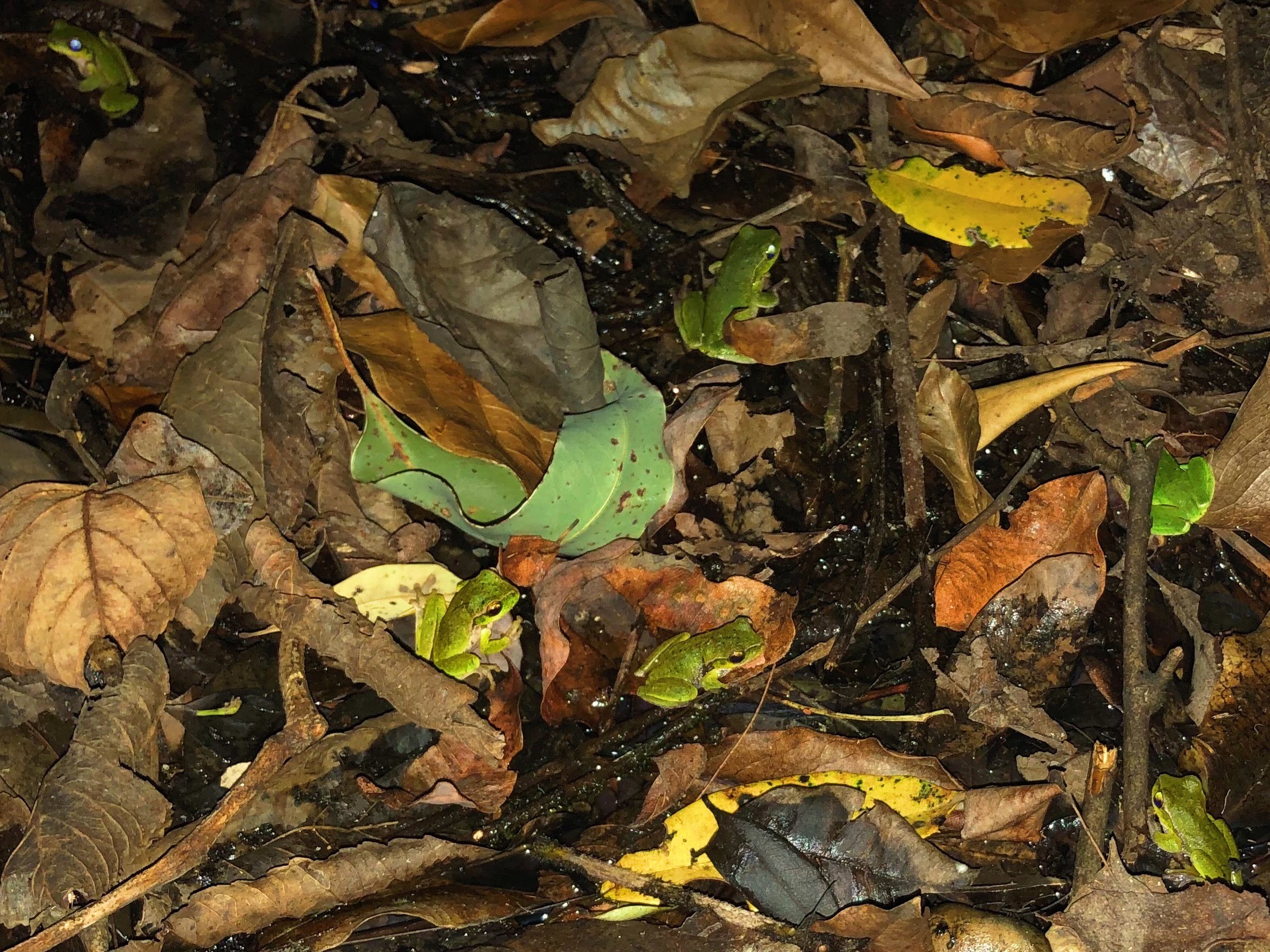
Only six of many!
November 2, 2019
It was pouring rain Sunday night, which is a frog’s favorite weather.
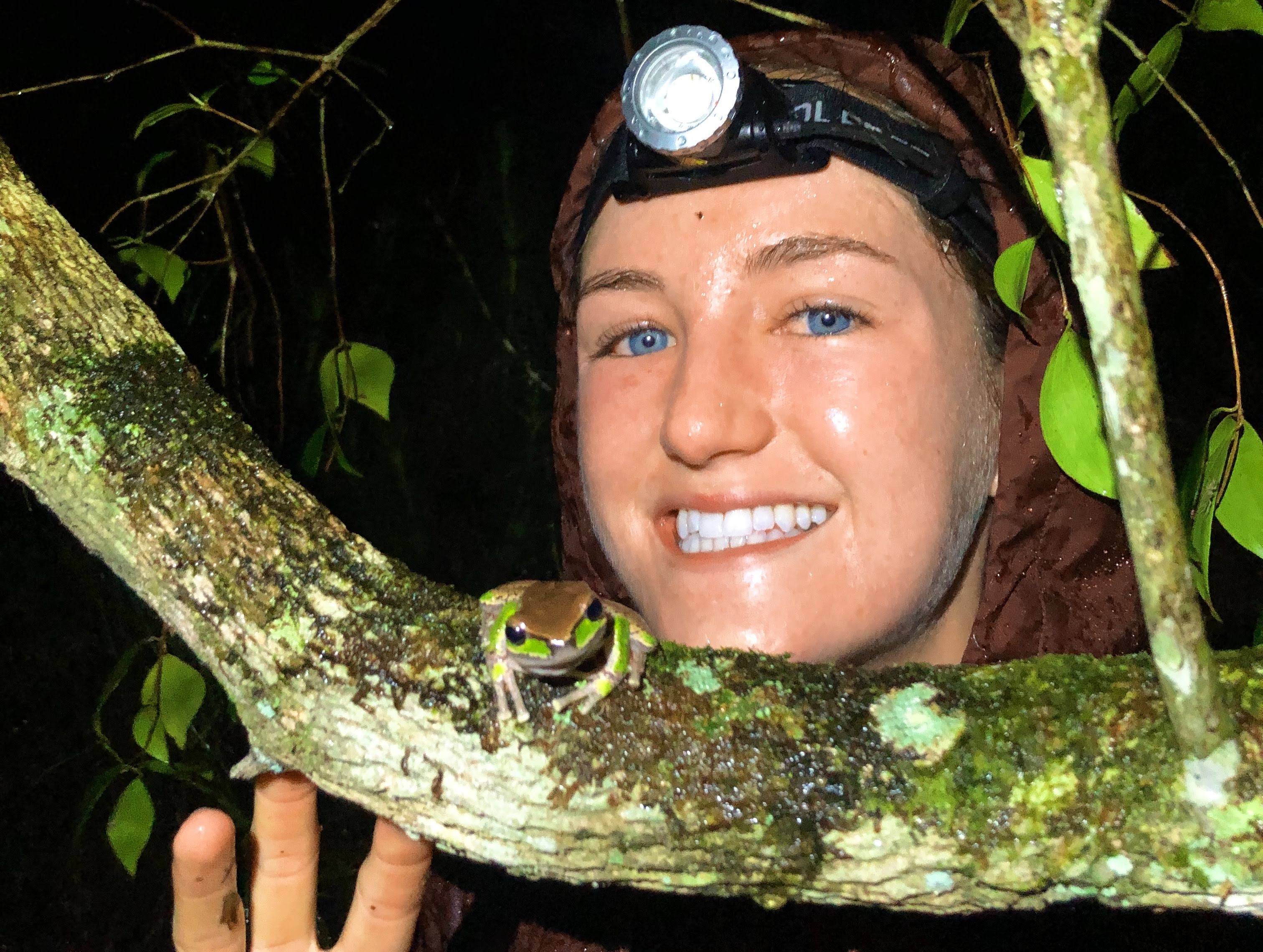
You see the most frogs when you need a
head lamp and rain jacket to walk outside!
November 3, 2019
So I got to meet some of my study species in the wild.
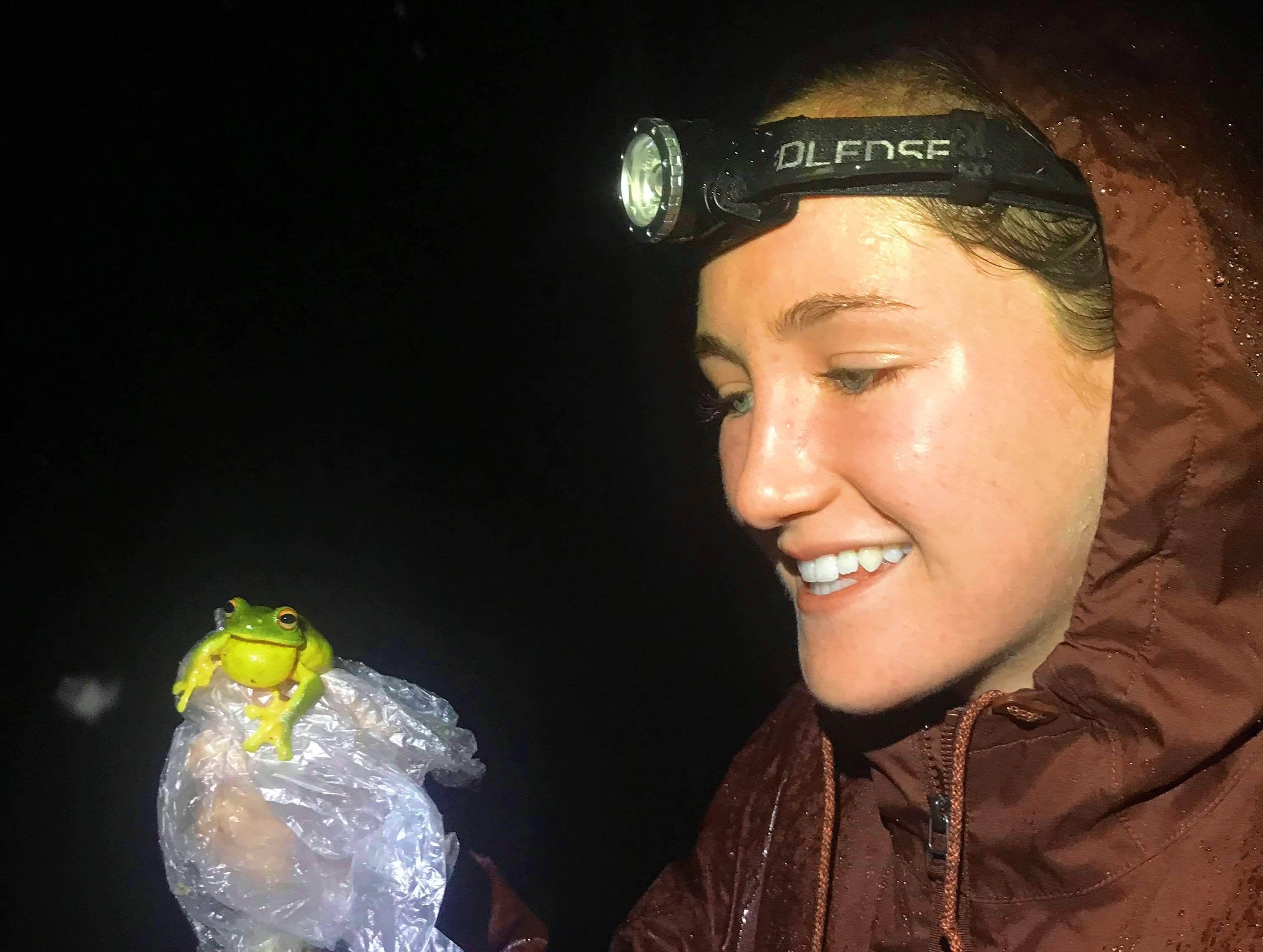
one of the frogs she listens to all day long.
November 3, 2019
And witnessed the beautiful diversity of Australian frogs.
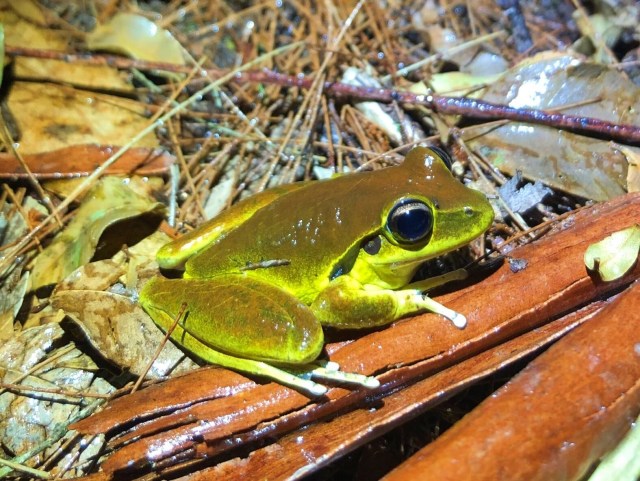
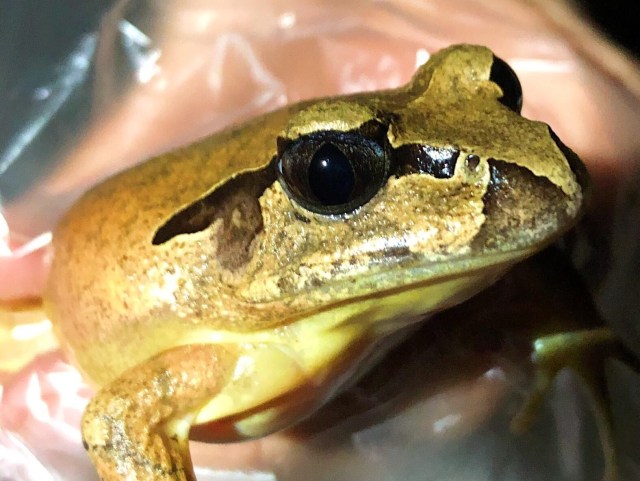
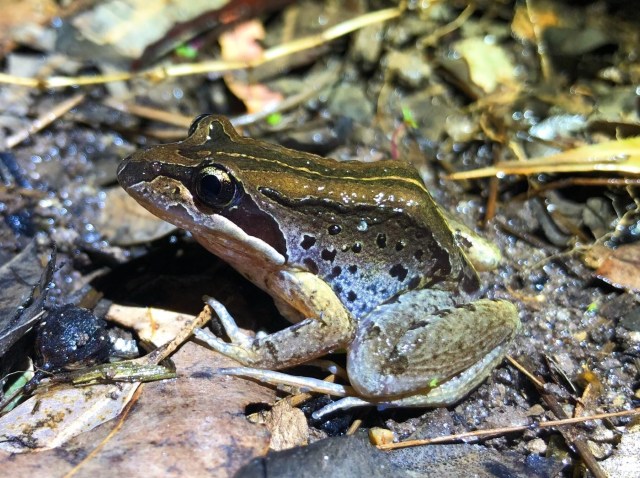
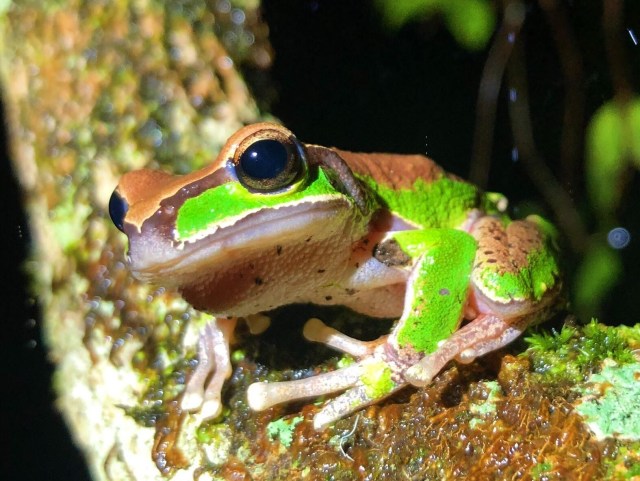
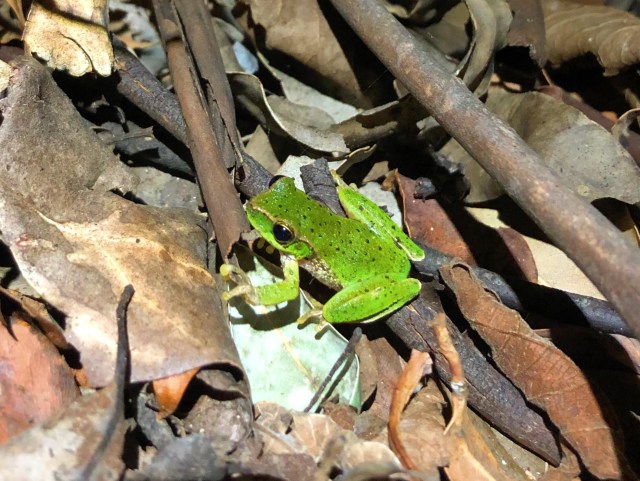
frog (Mixophyes balbus), striped marsh frog (Lymnodynastes peronii).
Bottom, left to right: Blue Mountains tree frog (Litoria citropa),
Barrington Tops tree frog (Litoria barringtonensis).
In all, I saw eighteen frog species I had never seen before! And that’s less than 10% of the total frog species throughout Australia!
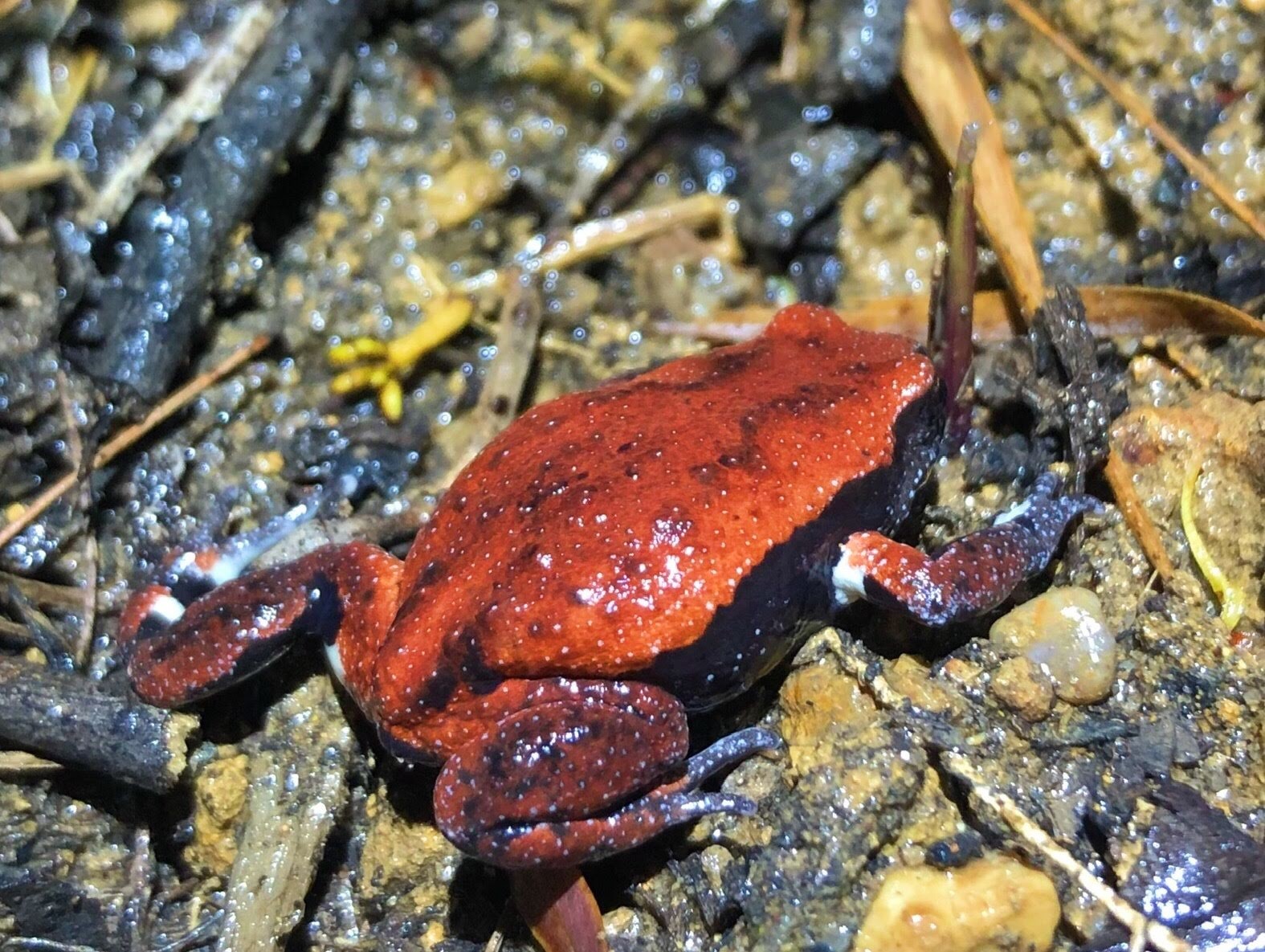
people who think all frogs are muddy-green and boring!
November 3, 2019
I’ve been learning about these frogs for a few months, and I finally got to live what I’ve learned when I heard and saw them in the wild this weekend. Who wouldn’t want to be a biologist?! I certainly know I’m on the right path, and that I won’t stop living my learning when my time down under comes to an end.
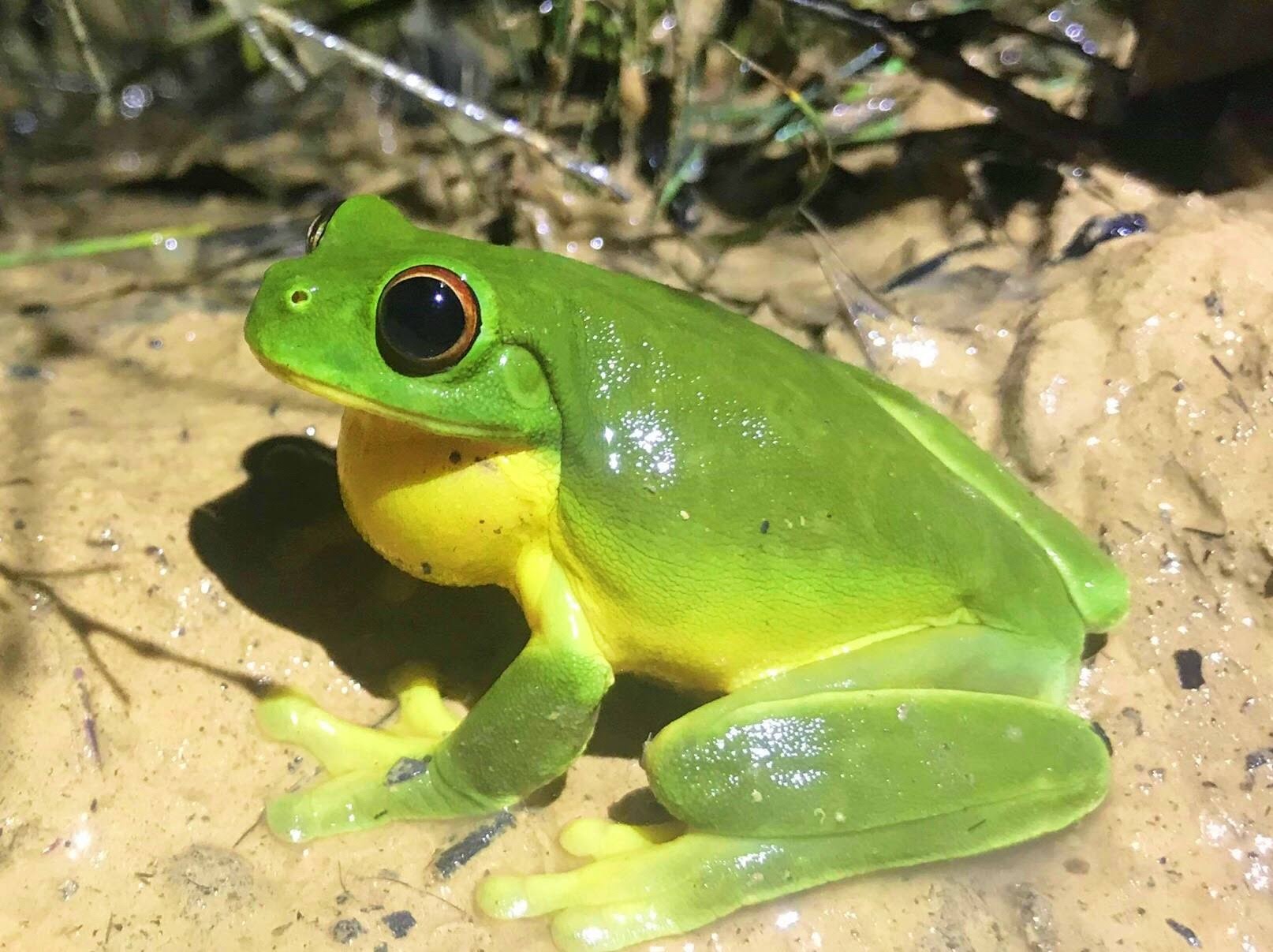
making the call I’ve listened to hundreds of recordings of!
November 3, 2019
Disclaimer: Always be cautious when observing wildlife. Do not touch or handle wild animals unless you are trained to. Human interactions with wildlife causes stress to the animal and promotes infectious disease transmission. I was with a trained herpetologist conducting research when these photos were taken.

 Living and Learning Down Under
They are all so beautiful! Each so colorful!
LikeLike